Yokai 101: The Spirits Behind The Sword of Gathering Clouds
If you’ve ever heard the word yokai, you might picture something monstrous—something lurking in the shadows, waiting to strike.
But yokai aren’t just monsters.
They are spirits. Creatures. Forces of nature. Some are dangerous. Some are playful. Some are misunderstood. And in The Sword of Gathering Clouds, they exist alongside humans—feared, controlled, and often treated as something less than equal.
So what exactly are yokai?
Let’s break them down.
What Are Yōkai? (妖怪)
Yōkai (妖怪) are a broad category of supernatural beings in Japanese folklore—monsters, spirits, demons, and strange phenomena that exist just beyond human understanding.
The word itself can be translated as “bewitching mystery” or “strange apparition,” which is fitting—because yōkai are not just creatures, but explanations for the unexplainable.
They can take many forms:
Shapeshifting animals
Spirits tied to nature or emotion
Objects that have come to life
Beings that blur the line between illusion and reality
Some are dangerous. Some are mischievous. Some are even considered lucky.
But all of them have one thing in common:
They exist in the spaces humans don’t fully understand.
In The Sword of Gathering Clouds, yōkai are not just folklore. They are part of a hidden world layered over our own—one that most people never see.
And once you do see it…
you don’t get to look away.
Types of Yōkai in The Sword of Gathering Clouds
Yōkai in Japanese mythology are not random creatures—they often fall into recognizable patterns, shaped by nature, belief, and human emotion.
In The Sword of Gathering Clouds, these interpretations are honored, but also reimagined through the lens of power, hierarchy, and control.
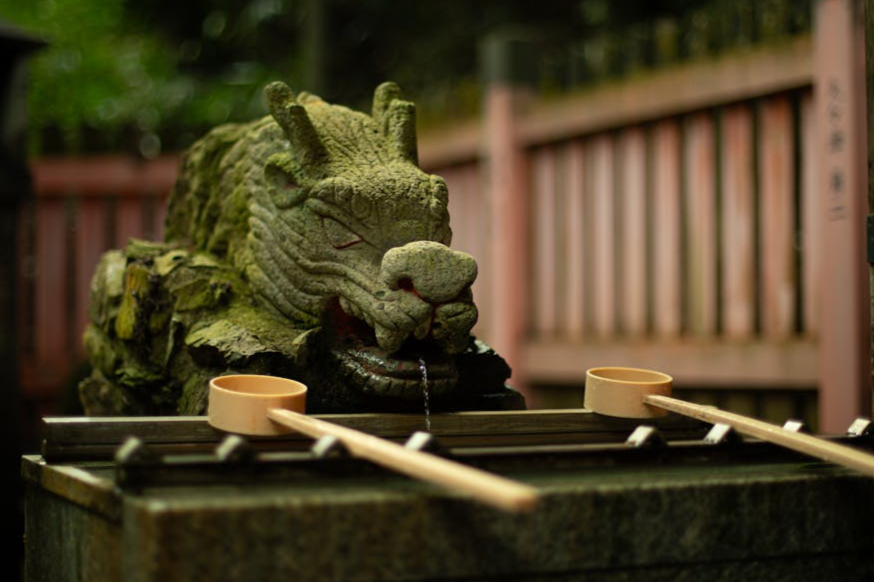
Dragon Yōkai (Ryū / 龍)
In Japanese mythology, dragons are not simply monsters—they are powerful, divine beings tied to water, storms, and the natural balance of the world. Unlike Western dragons, they are often seen as wise, ancient, and connected to the heavens or the sea.
Many are associated with rivers, oceans, and rainfall, acting as both creators and destroyers depending on how they are revered—or angered.
In The Sword of Gathering Clouds, dragon yōkai carry that same weight.
They are not easily categorized as good or evil.
They are forces.
And forces are not meant to be controlled.
Tengu (天狗)
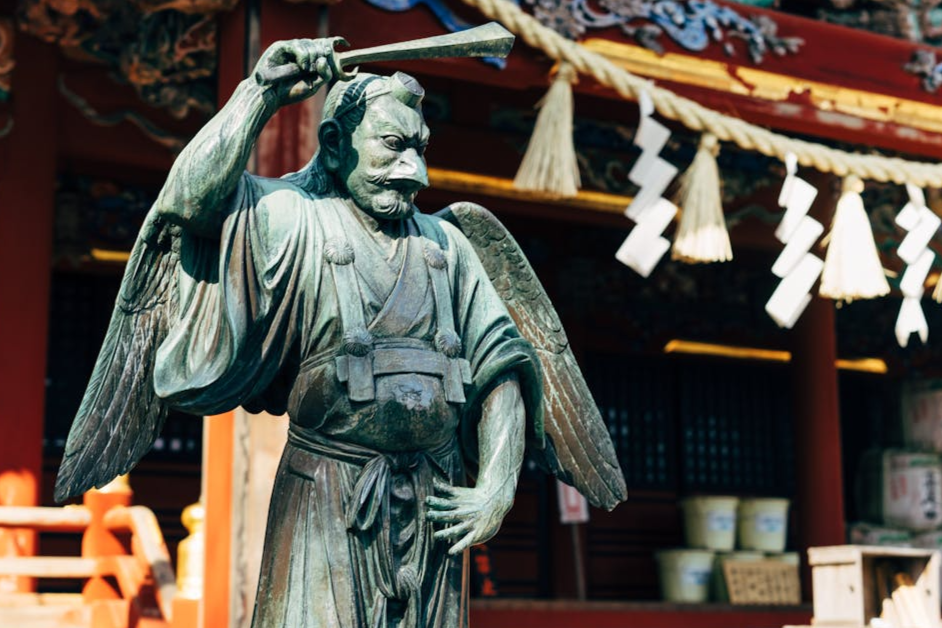
Tengu are some of the most complex yōkai in Japanese folklore.
Originally feared as dangerous spirits that could abduct children or lead travelers astray, they were said to appear in the mountains—watching, waiting, and interfering when they chose. Over time, their image shifted. They became associated with discipline, martial skill, and spiritual testing, often depicted as warrior-like figures or protectors of sacred spaces.
They are both tricksters and teachers.
In The Sword of Gathering Clouds, that duality remains.
A tengu may guide you when you are lost…
Or lead you somewhere you were never meant to go.
Oni (鬼)
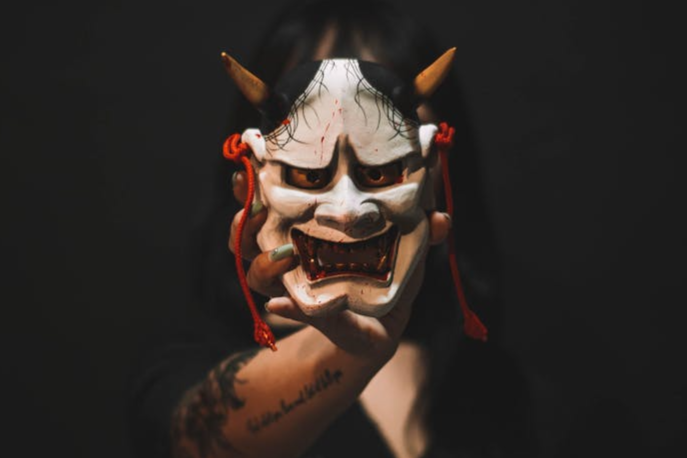
Oni are often seen as demons—large, terrifying figures with horns, wild features, and immense strength. In folklore, they are associated with punishment, suffering, and the underworld, often acting as tormentors of the wicked.
But oni are not always born.
Some are made.
In many stories, humans consumed by rage, jealousy, or grief can transform into oni over time. They are not separate from humanity—they are what humanity can become when emotion festers without control.
In The Sword of Gathering Clouds, that idea is central.
Oni are not just enemies.
They are warnings.
Kitsune (狐)
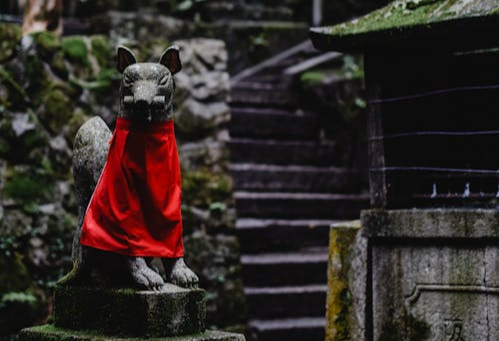
Kitsune are fox spirits known for their intelligence, longevity, and ability to shapeshift into human form. As they grow older and more powerful, they gain additional tails—each one representing increased wisdom and strength.
In Japanese mythology, kitsune are often associated with Inari, the deity of rice, prosperity, and fertility. As messengers of Inari, some kitsune are revered and protective, while others remain mischievous or even dangerous.
They exist in duality.
Loyalty and deception.
Protection and manipulation.
In The Sword of Gathering Clouds, kitsune reflect that same tension—never fully one thing, never fully the other.
Tsukumogami (付喪神) — Household Yōkai
Not all yōkai are born from gods or emotion.
Some are created from neglect.
Tsukumogami are everyday objects that, after existing for a hundred years, gain a spirit of their own. Umbrellas, lanterns, paper, tools—things once considered lifeless begin to move, think, and exist.
In folklore, they are often playful or mischievous, but their existence carries a deeper message:
Nothing is truly inanimate.
In The Sword of Gathering Clouds, these yōkai bring a quieter kind of unease.
An umbrella that moves when no one is looking
Paper that folds and breathes
Small, strange figures that seem harmless—until they aren’t
They are not feared like dragons.
They are not respected like warriors.
But they are always there.
Only the Beginning
The yōkai described here are only a fraction of what exists.
Across Japan, stories tell of countless spirits—some familiar, some strange, many never written down at all. They live in mountains, in rivers, in objects, in memory.
Some are still waiting to be remembered.
The Sword of Gathering Clouds only touches the surface of that world.
